16th February 2026
5 Myths About Glass Door Refrigeration

7 Years parts & labour warranty


Brand and Marketing Manager EMEA
At True Refrigeration we pride ourselves on being at the forefront of commercial refrigeration. Our extensive product range gives our food service customers everything they need in the moment to keep operations running effectively, but we always have an innovative eye on what’s next to constantly evolveour ranges to keep pace with future needs.
Retail, hospitality and food service businesses are continually looking for different ways to reduce energy consumption, cut operational costs and optimize space utilization, while maintaining food safety and improving the overall customer experience.
The UK and Europe are seeing continued growth in foodservice locations and restaurants alongside retail outlets, grab and go facilities plus a prominence of food halls and street food. Increasing capacity, reducing the refrigeration footprint (both physically within the kitchen space and in terms of carbon emissions), eliminating waste and maximizing operational efficiency are key priorities for operators.
Food service businesses are increasingly looking for automated efficiency in commercial kitchens. Many are adopting a smart approach with IoT enabled refrigeration systems, that have sophisticated elements which deliver practical solutions and confidence in operational performance.
Future marketing insights predicts that 2025 to 2035 will signify the period in which automation and smart technology will become the norm rather than the exception, in a move to drive costs down, maximize the life span of equipment and improve sustainability.
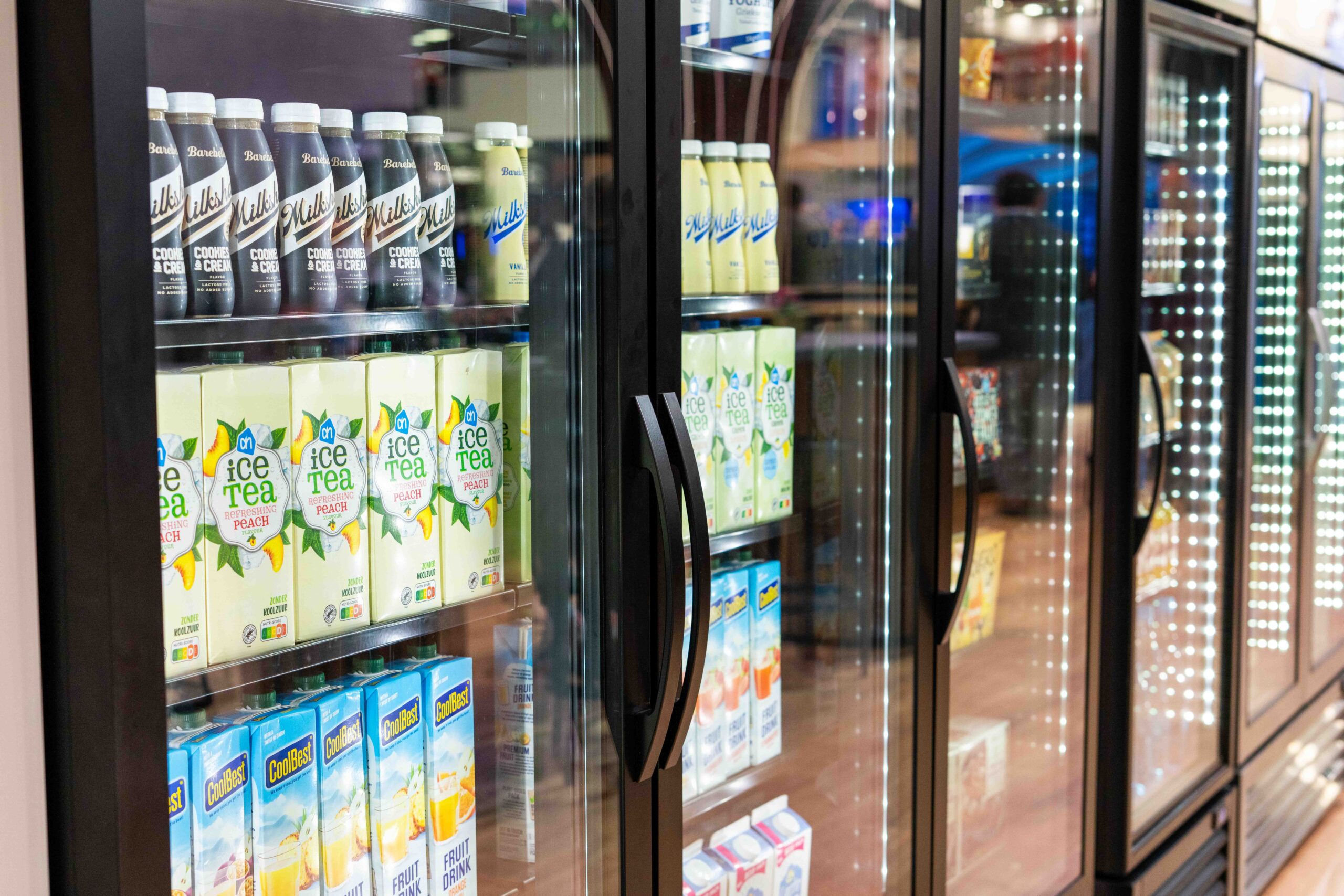
Businesses are increasingly opting for refrigeration systems that maximize storage without taking up more valuable kitchen, dining or shopping space. Capacity and performance are crucial, while energy efficiency, cost reduction and food safety are equally important. It’s a fine balance.
A continuing theme for 2026 and beyond is sustainable solutions in commercial refrigeration – driven by both regulatory changes and customer demand.
With 83% of people saying that they expect foodservice brands to play their part in solving challenges like climate change6 and 71% of food and beverage leaders naming climate change as a top risk to operations7, innovation, sustainability and climate impact reduction must be at the forefront of any environmentally and socially responsible commercial refrigeration strategy.
At True, we are committed to supporting operators to be more environmentally responsible, achieve targets to reduce energy consumption and save money by supplying better, more reliable, energy efficient refrigeration products.
From introducing the glass door cooler in a testing lab in Puerto Rico in the 1950s to continual innovation which creates a value equation through extended warranty, product confidence and high levels of service, True is constantly looking for ways to do things better.
Natural Refrigerants: For commercial refrigeration equipment, Hydrocarbon refrigerants (HCs) have been selected as the environmentally friendly successor to outlawed hydrofluorocarbon (HFC) refrigerants for commercial refrigeration. They are natural, non-toxic gasses with no ozone depleting properties and low global warming potential. Coolants offered in True products are in their fourth generation, whereas many other manufacturers are only 1st or 2nd generation iteration of natural coolant products. True’s Natural Refrigerant development initiative aligns perfectly with operators focused on responsible environmental practices.
Energy Calculation: Data driven decision making will also be a continuing trend for 2026. Alongside smart refrigeration for operational performance, data on future energy consumption will be a key driver in deciding where to invest in equipment. Calculating the estimated energy cost and carbon emissions of each piece of kit makes a huge difference to its lifetime value and sustainable performance. True’s Energy Cost Calculator is an innovative app which helps operators make informed choices on energy efficient equipment, based on average energy consumption and greenhouse gas equivalent metrics. It provides a lifetime estimate of potential energy and carbon savings, to help make informed, environmentally conscious choices.
In short, finding innovative commercial refrigeration solutions to help do things more quickly, efficiently and cost effectively are key to sustainable success.